Texas Smoked Brisket
Whole packer brisket, Dalmatian rub, thin blue oak smoke, butcher-paper wrap through the stall, then a long rest. Pull when the probe slides through the flat like warm butter — temperature is a checkpoint, tenderness is the call. Written for a pellet grill (Z Grills and similar); offset notes in the steps.
14 servings
By
Yield: 12-16 servings
Prep:
Cook:
Rest:
Total:
Ingredients
Brisket
- 1 whole packer brisket, 12 to 14 pounds, USDA Choice or Prime
- 1/2 cup Diamond Crystal kosher salt (use 1/3 cup if using Morton)
- 1/2 cup coarse black pepper (16-mesh if you can get it)
- 1 tablespoon garlic powder (optional; skip for a strict Central Texas rub)
- 2 tablespoons yellow mustard, for binder (optional)
- 1/4 cup beef tallow, softened, for the wrap (optional)
- Oak pellets (post oak if you have them; hickory or pecan blend also works)
- Unwaxed pink butcher paper
Spritz
- 1/2 cup water mixed with 1/2 cup apple cider vinegar (optional)
Instructions
- Keep the brisket cold. On a large board, square the thin edge of the flat so it will not dry into a point. Remove the hard fat and silver skin from the meat side. Leave a 1/4-inch fat cap on top — even, not bald, not a slab. A 13-pound packer usually lands around 11 pounds after trim. Pat dry.
- Mix the salt and pepper (and garlic powder if using). A thin smear of mustard helps the rub stick; it will not taste like mustard when you slice. Coat every surface so it looks like wet sand, not a cakey crust. Set on a rack, uncovered, in the fridge 4 hours or overnight if you have the time. If you do not, season and go — give it at least 30 minutes on the counter while the pit comes up.
- Heat a pellet grill to 250 F with oak. Thin blue smoke, not white billows. Place the brisket fat-cap down on a pellet grill (heat lives under the grate). On an offset, run fat-cap up. Insert a probe into the thickest part of the flat, avoiding the fat seam between point and flat. Close the lid and leave it alone for the first 3 hours.
- When the bark looks set and dry — usually around 160 to 170 F internal — you can spritz the dry spots with the vinegar-water mix. Do not soak it. If the bark is already dark and tacky, skip the spritz.
- Wrap when the bark will not rub off on your finger and the flat is in the stall, typically 165 to 175 F. Lay out two sheets of pink butcher paper. Smear a thin film of tallow on the paper if you have it. Wrap tight like a package, fat cap still oriented the same way, and return to the grate. Foil works if you are out of paper; the bark will be softer.
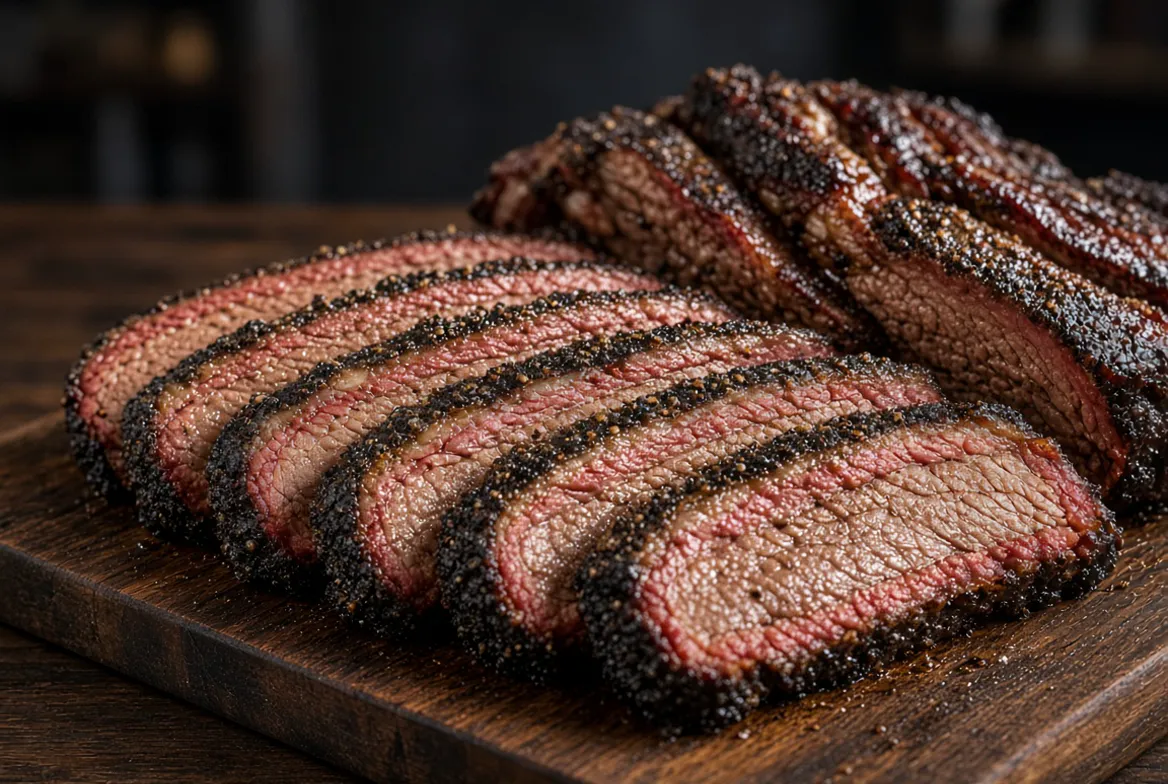
- Keep the pit at 250 F. Start probing the flat at 195 F. You are looking for 200 to 205 F and a probe that slides in with almost no resistance, like warm butter. The point can run a few degrees hotter. A 12 to 14 pound packer is usually 10 to 14 hours start to pull. Do not chase the clock.
- Hold the wrapped brisket in a dry cooler (towels under and over) for at least 2 hours. Three is better. The juices pull back in and the bark firms up. Do not slice hot off the grate or you will watch the juice run onto the board.
- Separate the point from the flat along the fat seam. Slice the flat across the grain, pencil-thick. Turn the point 90 degrees — the grain runs a different direction — and slice it thicker, or cube it for burnt ends. Serve with the rendered juices from the wrap. Sauce on the side if anyone asks; the meat does not need it. Leftovers keep 4 days refrigerated, or vacuum and freeze up to 3 months. Reheat slices in a covered pan with a spoon of tallow or broth at 275 F until just warm.